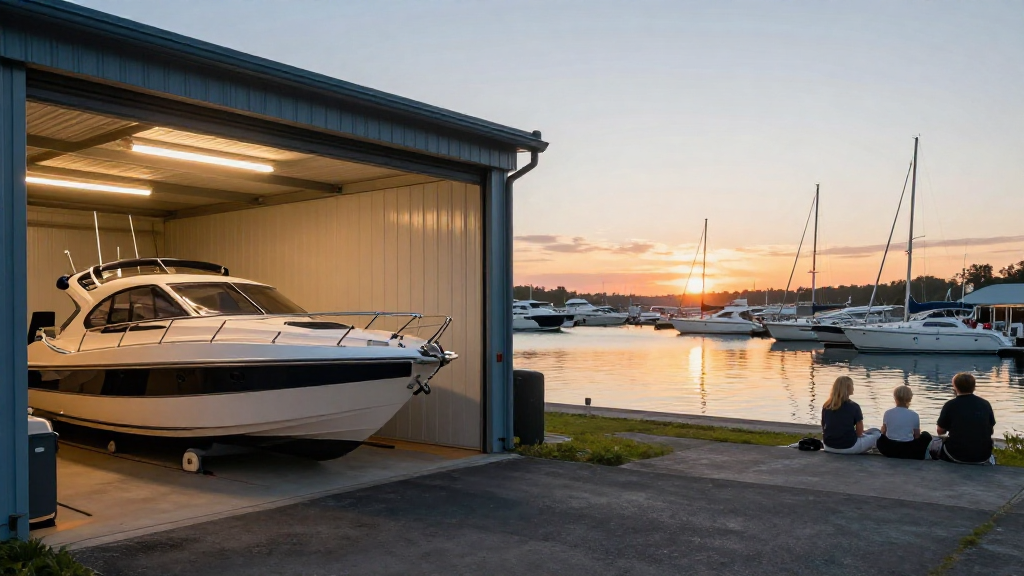
Deciding on the right method for storing your boat can be a daunting task. In this guide, we’ll explore how to store a boat indoors vs outdoors, highlighting the pros and cons of each option to ensure your vessel remains in top condition.
What Should You Consider When Choosing Storage?
When it comes to determining how to store a boat indoors vs outdoors, several key factors come into play:
- Climate conditions: Weather significantly impacts your boat’s condition, making it essential to consider exposure to the elements.
- Type of boat: The kind of boat you own—whether it’s a fiberglass, aluminum, or wooden craft—can influence the storage method due to material sensitivities.
- Budget: Cost is often a deciding factor in choosing between indoor and outdoor boat storage.
Evaluating these aspects can help you make the best decision for your boating needs.
What Are the Advantages of Indoor Boat Storage?
Enhanced Protection
One of the major benefits of choosing indoor storage is the heightened protection your boat receives. Here are some advantages:
- Shield from Weather: By storing your boat indoors, it remains safe from rain, snow, UV rays, and extreme temperatures.
- Pest Control: Indoor facilities limit the risk of pests, like rodents or insects, that could damage the interior of your boat.
- Reduced Wear and Tear: Keeping your boat indoors can greatly minimize wear and tear, preserving the aesthetics and functionality of your vessel.
Security
When you opt for indoor storage, you usually benefit from increased security features:
- Controlled Access: Many indoor storage facilities use gated access or security cameras, providing an extra layer of safety against theft or vandalism.
- Insurance Benefits: Some boat insurance policies may offer lower premiums if your boat is stored indoors due to reduced risk.
What Are the Disadvantages of Indoor Boat Storage?
While indoor storage has numerous benefits, some drawbacks should be considered:
- Higher Costs: Indoor storage typically comes with a higher price tag compared to outdoor options.
- Limited Space: Depending on the facility, you may find availability issues, especially during peak boating season.
- Accessibility: You may find it less convenient to access your boat if you need to navigate through a storage facility.
Evaluating these cons will help you weigh the overall value of indoor storage for your boat.
What Are the Advantages of Outdoor Boat Storage?
Cost-Effective Solution
Outdoor storage often proves to be more affordable than its indoor counterpart. Here’s why:
- Lower Rental Fees: Outdoor storage units or marinas typically charge significantly less than indoor facilities.
- Flexible Options: Many outdoor storage spaces can accommodate large boats or trailers, and you can often find various pricing structures.
Convenient Accessibility
When considering how to store a boat indoors vs outdoors, outdoor storage often offers greater access:
- No Waiting: Outdoor storage usually allows for easy pickup and drop-off without needing to navigate hallways or contending with traffic in a facility.
- Ease of Maintenance: You can easily wash or service your boat without being confined to a small space.
What Are the Disadvantages of Outdoor Boat Storage?
While outdoor storage has benefits, there are drawbacks to consider:
- Exposure to the Elements: Your boat will be more vulnerable to weather conditions like rain, snow, wind, and sunlight, potentially leading to damage over time.
- Increased Maintenance: Boats stored outdoors may require more frequent cleaning and upkeep due to dirt, debris, and algae.
- Limited Security: Outdoor storage typically has fewer security measures in place, which could leave your boat susceptible to theft or vandalism.
How Does Your Boat Type Affect Storage Choice?
For Small and Lightweight Boats
If you own a small and lightweight boat, outdoor storage may be a feasible option. It can be easy to trailer, meaning you can maintain efficient accessibility.
For Larger or Heavier Boats
However, larger vessels benefit more from indoor storage.
- Protection from Elements: Larger boats, especially expensive yachts, are best protected indoors from harsh weather conditions.
- Security Concerns: High-value larger vessels are more likely to attract unwanted attention, making indoor storage a wise choice due to security measures.
How Important Is Location for Your Boat Storage?
Location plays a significant role in your choice between indoor and outdoor storage options:
- Proximity to Water: If you store your boat in a location close to your favorite lake or ocean, consider convenience as a factor. Outdoor storage may lend itself better to ease of launching your boat.
- Storage Facility Reputation: Research local storage facilities. Read reviews and evaluate the potential risks associated with your chosen facility or marina.
Is Your Decision Influenced by Seasonal Changes?
When deciding how to store a boat indoors vs outdoors, it’s crucial to consider the seasonal changes in your area:
- Winter Considerations: If you live in a region with heavy snow or extreme cold, indoor storage may be more suitable for protecting your boat’s integrity during off-peak seasons.
- Summer Protection: UV rays can wreak havoc on your boat’s exterior. Indoor storage provides essential protection that can help maintain the vessel’s finish.
Conclusion: Which Storage Solution Best Fits Your Needs?
Ultimately, the decision between indoor and outdoor boat storage relies heavily on your unique circumstances.
- If protection, security, and maintenance savings are your top priorities, indoor storage may be the best choice for you.
- However, if you’re on a budget, require ease of access, and own a small or lightweight boat, outdoor storage may be more suitable.
Before making a final decision, weigh all factors like climate, boat type, budget, and accessibility. You might even find a combination of both storage methods works best for your unique situation.
In essence, understanding how to store a boat indoors vs outdoors allows you to choose wisely and ensure that your boat remains in optimal condition year-round. Enjoy your boating, and be sure to keep it safe!