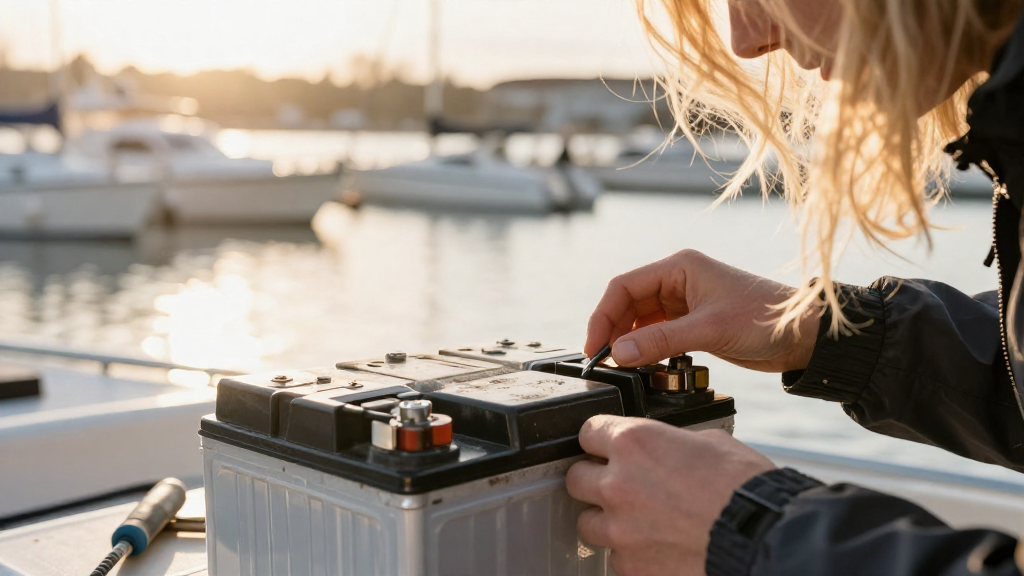
As the boating season approaches, knowing how to check your battery after winter storage is crucial to ensure your boat is ready for the water.
Why Is It Important to Check Batteries?
After several months in storage, your boat’s batteries may have experienced various conditions that could affect their performance.
Here are several reasons why checking them is essential:
- Self-Discharge: Batteries lose charge over time, especially in cold conditions.
- Corrosion: Terminals may corrode and connections can become loose during storage.
- Fluid Levels: Lead-acid batteries can lose electrolyte levels, which can damage them if not addressed.
What Tools Do You Need to Check Your Batteries?
Before you start, gather the necessary tools for an effective check:
- Digital Multimeter: To measure voltage and diagnose battery health.
- Hydrometer: For checking the specific gravity of the battery fluid.
- Wrench or Socket Set: For loosening terminals and checking connections.
- Protective Gear: Gloves and safety goggles to ensure safety while handling batteries.
How to Inspect the Battery Physically
Checking the physical condition of the battery is the first step in how to check your battery after winter storage. Follow these steps:
-
Disconnect the Battery:
Safety first! Ensure the battery is disconnected to avoid any potential electrical shocks while working. -
Inspect for Damage:
Look for cracks or bulging in the battery casing, which may indicate internal damage. -
Check Connections:
Ensure the terminals are clean and free from corrosion. Use a wire brush to remove corrosion if necessary. -
Examine Fluid Levels:
For lead-acid batteries, check the electrolyte levels. If they are low, top them up with distilled water. -
Check for Leaks:
Look for signs of electrolyte leakage, which could indicate a major problem.
How to Measure Battery Voltage?
After completing the physical inspection, you should check the voltage to determine the battery’s charge level. Here’s how:
-
Set Up the Multimeter:
Turn on your digital multimeter and set it to measure DC voltage. -
Connect the Probes:
Place the red probe on the positive terminal and the black probe on the negative terminal. -
Record the Reading:
- A fully charged marine battery should read around 12.6 volts or higher.
- If the reading is 12.4 volts, the battery is moderately charged and may need recharging.
- A reading below 12.0 volts indicates a low charge and may need to be replaced or at least charged immediately.
Should You Test the Battery’s State of Charge?
Yes, testing the battery’s state of charge adds a deeper layer of analysis to how to check your battery after winter storage.
-
Use the Hydrometer:
Dip the hydrometer into each battery cell to check the specific gravity. -
Interpret the Results:
– A reading between 1.265 and 1.299 indicates a fully charged state.
– Readings below 1.225 can mean the battery is significantly discharged.
How to Maintain Your Boat Batteries?
Once you’ve checked the battery after winter storage, maintaining the health of your battery is vital for the longevity of your investment. Consider the following:
-
Regular Charging: Recharge your batteries regularly to prevent deep discharges.
-
Clean and Protect: Clean terminals and apply a corrosion inhibitor for added protection.
-
Use Smart Chargers: Invest in a smart charger that can optimize charging cycles.
What If the Battery Is Dead?
If your checks indicate that the battery is dead or severely drained, you have a couple of options:
-
Recharge: Use a quality charger tailored for marine batteries to bring them back to life.
-
Replace: If the batteries are old or show signs of irreversible damage, it may be time to invest in new ones.
How Often Should You Check Your Batteries?
Not just a one-time event, checking your batteries should occur regularly throughout the boating season:
- Monthly Checks: It’s best to inspect your batteries at least once a month during active use.
- Before Winter Storage: Conduct a thorough check before storing in the winter to ensure they’re not left low and at risk of freezing damage.
Are There Other Considerations?
Yes, keeping an eye on your battery maintenance system is essential:
-
Monitor Temperature: Consider the environment where the batteries are stored; extreme temperatures can affect performance.
-
Battery Age: Old batteries exhibit performance drops; keep track of how long you’ve had each one.
-
Professional Help: Don’t hesitate to consult a professional if you suspect any major issues after your tests.
Conclusion
Knowing how to check your battery after winter storage protects your investment and enhances your boating experience.
By following the steps laid out in this article, you can ensure that your boat batteries are safe, functional, and ready for the season ahead.
Take the time to conduct these checks and maintenance procedures.
Your future boating adventures will be all the more enjoyable when you know your batteries are in top condition!